Australian businesses are increasingly feeling the effects of higher fuel prices and supply chain disruptions, with new data from the Australian Bureau of Statistics revealing a growing number of organisations are cutting costs, delaying investment and bracing for tougher trading conditions.
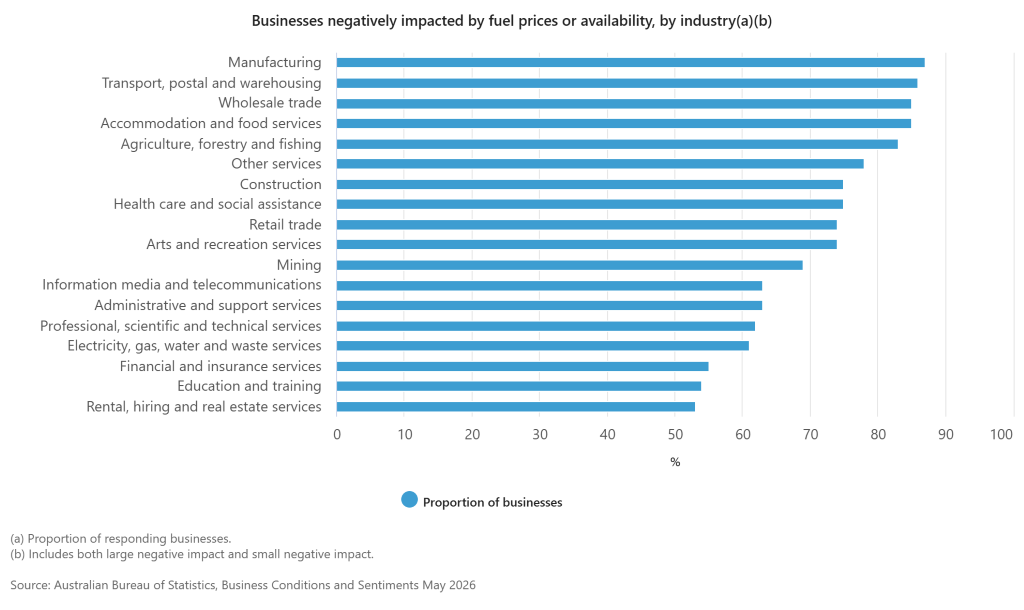
The latest Business Conditions and Sentiments survey, reinstated following disruptions linked to the closure of the Strait of Hormuz, found nearly three quarters of businesses (72%) reported fuel prices or fuel availability were having a negative impact on their operations. One in six businesses also reported experiencing supply chain disruptions, highlighting the broad reach of current economic pressures.
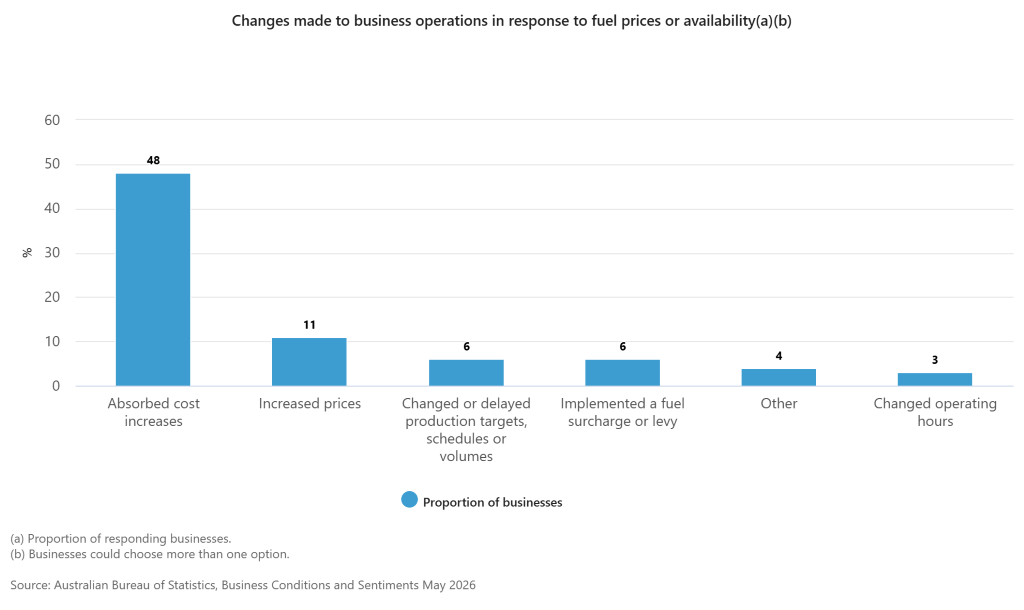
Rather than passing costs directly onto customers, many businesses appear to be absorbing the impact. Almost half (48%) reported absorbing higher operating costs, while only 11% increased prices and 6% introduced fuel surcharges. Another 6% said they had delayed or changed production schedules as a result of fuel-related pressures.
The burden is falling particularly heavily on industries that rely on transport and logistics. More than half of businesses in transport, postal and warehousing reported a significant negative impact from fuel prices, while agriculture, accommodation and food services also recorded high levels of disruption.
The pressure is now beginning to influence broader business decisions. More than a quarter of businesses reported making workforce-related changes in response to fuel costs, including reducing non-essential travel and, in some cases, reducing employee numbers. Medium-sized businesses were the most likely to report workforce reductions.
Investment plans are also being put on hold. One in six businesses said they had delayed or cancelled capital investment plans over the previous month due to fuel prices or availability. The figure was particularly high among wholesale trade, agriculture, transport and manufacturing businesses, sectors that play a critical role in Australia’s supply chains.
The financial strain is becoming increasingly visible in business performance. More than a third of businesses reported revenue had declined over the previous four weeks, while half said operating expenses had increased. Fuel costs were overwhelmingly identified as the leading contributor to rising expenses, followed by freight and delivery costs.
Looking ahead, business sentiment remains subdued. More than one quarter of businesses expect revenue to decline over the next month, while one third believe it will be difficult to meet financial commitments such as payroll, debt repayments and supplier obligations. Concerns are particularly pronounced in transport, accommodation, food services and agriculture.
While fuel prices remain at the centre of the current disruption, the findings suggest the impact is now spreading across the broader economy. Businesses are adjusting operations, delaying growth plans and reassessing spending decisions as they navigate a more uncertain operating environment. For many organisations, the challenge is no longer simply managing higher costs but maintaining profitability and confidence while doing so.