CSIRO has released the findings of its first public dialogue on quantum technologies, finding Australians’ support for emerging technologies depends on transparency, accountability and public benefit.
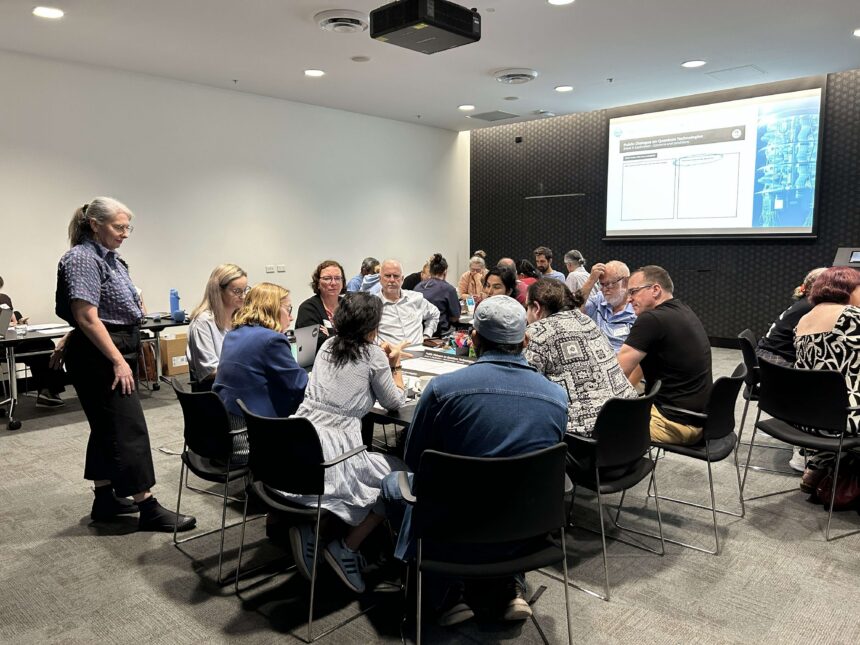
Delivered through CSIRO’s Science Connect initiative, the pilot brought together 39 citizens and 18 quantum specialists to discuss how quantum technologies could affect areas including healthcare, communications and supply chains. Public dialogue, an approach widely used in the United Kingdom, Canada and across Europe to inform science and technology policy, brings members of the public together with experts to discuss complex issues and help shape future decisions.
Quantum technologies are expected to create new opportunities in areas such as healthcare, secure communications and advanced computing over the next decade. As these technologies move from research into real-world applications, CSIRO said it wanted to better understand how Australians think about their potential benefits, risks and future development.
Participants ranged in age from 18 to over 70 and represented a range of backgrounds and lived experiences. Before the dialogue, 74 per cent reported limited familiarity with quantum technologies. Following the sessions, around 90 per cent said they had a better understanding of the technology, while a similar proportion reported feeling more confident discussing its potential impacts on society.
The dialogue found participants were less concerned about whether quantum technologies should exist than about how they would be developed, governed and used. Discussions focused on issues including trust, governance, fairness, privacy and public benefit, with participants calling for transparency, independent oversight and evidence that public investment delivers public value.
Tristy Falkenberg, Deputy Director of CSIRO’s Science Connect, said the dialogue showed Australians could make meaningful contributions to conversations about emerging technologies regardless of their prior knowledge.
“One of the most important findings was that people really don’t need a physics degree to have meaningful conversations about complex emerging technologies. Most participants came into the room knowing very little about quantum. Yet they quickly engaged with questions around trust, governance, fairness and public benefit.”
Falkenberg said participants were interested in the conditions under which quantum technologies would be introduced and managed.
“We found Australians weren’t asking whether quantum technologies should exist. They’re asking under what conditions should the technology be developed, governed and used.”
Healthcare generated some of the strongest discussion during the dialogue. Participants identified opportunities for earlier diagnosis, improved access to care and better health outcomes for regional and remote communities, while also raising questions about privacy, over-diagnosis and the use of sensitive health data.
Across all discussions, participants wanted to know who would control the technology, how data would be protected and how the benefits would be shared. Many also said the advantages of quantum technologies should extend to regional and rural Australia.
The dialogue was designed as a two-way learning experience, providing researchers and specialists with insights into community expectations while allowing participants to engage directly with experts. Sally Shrapnel, Associate Professor of Physics at The University of Queensland and Deputy Director of the ARC Centre of Excellence for Engineered Quantum Systems (EQUS), said hearing directly from the public had been one of the most valuable aspects of the process.
“Hearing their perspectives on what matters to them, as well as the risks and benefits they see, is incredibly important and has been one of the key takeaways.”
The findings come as international experts continue to advocate for greater public participation in science and policy. CSIRO said it is now exploring how the public dialogue model could be applied to other issues, including artificial intelligence and climate adaptation, to help governments, industry and research organisations make socially informed policy, research and investment decisions.
Read the full report here.